Les étapes précédant la traduction

Els Peleman • 4 november 2024

La sous-traitance d’une traduction ne se résume pas à envoyer le texte au traducteur. Le texte doit être parcouru et analysé. Souvent, il faut encore répondre à certaines questions avant de pouvoir procéder à la traduction.

Parcourir et analyser


Avant toute chose, il faut ouvrir le document afin de déterminer les éléments suivants :


  • quelle est la langue source ? Nous vous conseillons d’indiquer dans votre e-mail dans quelle(s) langue(s) le texte doit être traduit.
  • quel est le sujet du texte et à qui s’adresse-t-il ? Nous pouvons ainsi contacter les traducteurs compétents (pour des traductions techniques, des traductions de site Internet nécessitant un travail de SEO, etc.)


Nous effectuons une analyse du nombre de mots à traduire avec notre logiciel de traduction. Attention : il ne s’agit pas d’un outil qui effectue les traductions à notre place ! Pour obtenir davantage d’informations sur les programmes de traduction professionnels (outils de TAO ou outils de Traduction Assistée par Ordinateur), consultez mon blog : Comment un traducteur professionnel travaille-t-il concrètemtent?


En fonction de cette analyse, nous calculons le prix (voir la rubrique Prix indiquant tout ce qui est inclus dans le tarif). Au besoin, nous contactons déjà un traducteur et un réviseur experts dans le domaine en question.


Vos traductions sont-elles destinées à la Belgique et/ou aux Pays-Bas ?


Lorsqu’un texte doit être traduit vers le néerlandais, nous vous posons toujours quelques questions supplémentaires au moment d’établir le devis : "Le texte est-il destiné à la Belgique et/ou aux Pays-Bas ?"


Pour des textes techniques, les différences sont quasi voire inexistantes. En revanche, pour des traductions de sites Internet par exemple, un terme utilisé en Belgique peut avoir un tout autre sens aux Pays-Bas.


Si vous demandez une traduction vers le néerlandais, pensez donc à nous indiquer à quel marché il est destiné.
Dans certains cas, si le texte est destiné à la Belgique et aux Pays-Bas, nous vous conseillerons d’utiliser deux versions. Nous l’avons déjà fait pour un site Internet spécialisé en articles de puériculture, par exemple.


Vous ne payez pas le prix de deux traductions dans ce cas. Nous facturons le prix d’une traduction et un supplément pour la localisation du texte traduit (ou adaptation à un marché spécifique).

Pour les traductions vers le français, nous vous demandons également de choisir entre l’ancienne et la nouvelle orthographie. 
Combien coûte une traduction vers le néerlandais? D'où vient ce prix?
door Els Peleman 2 maart 2026
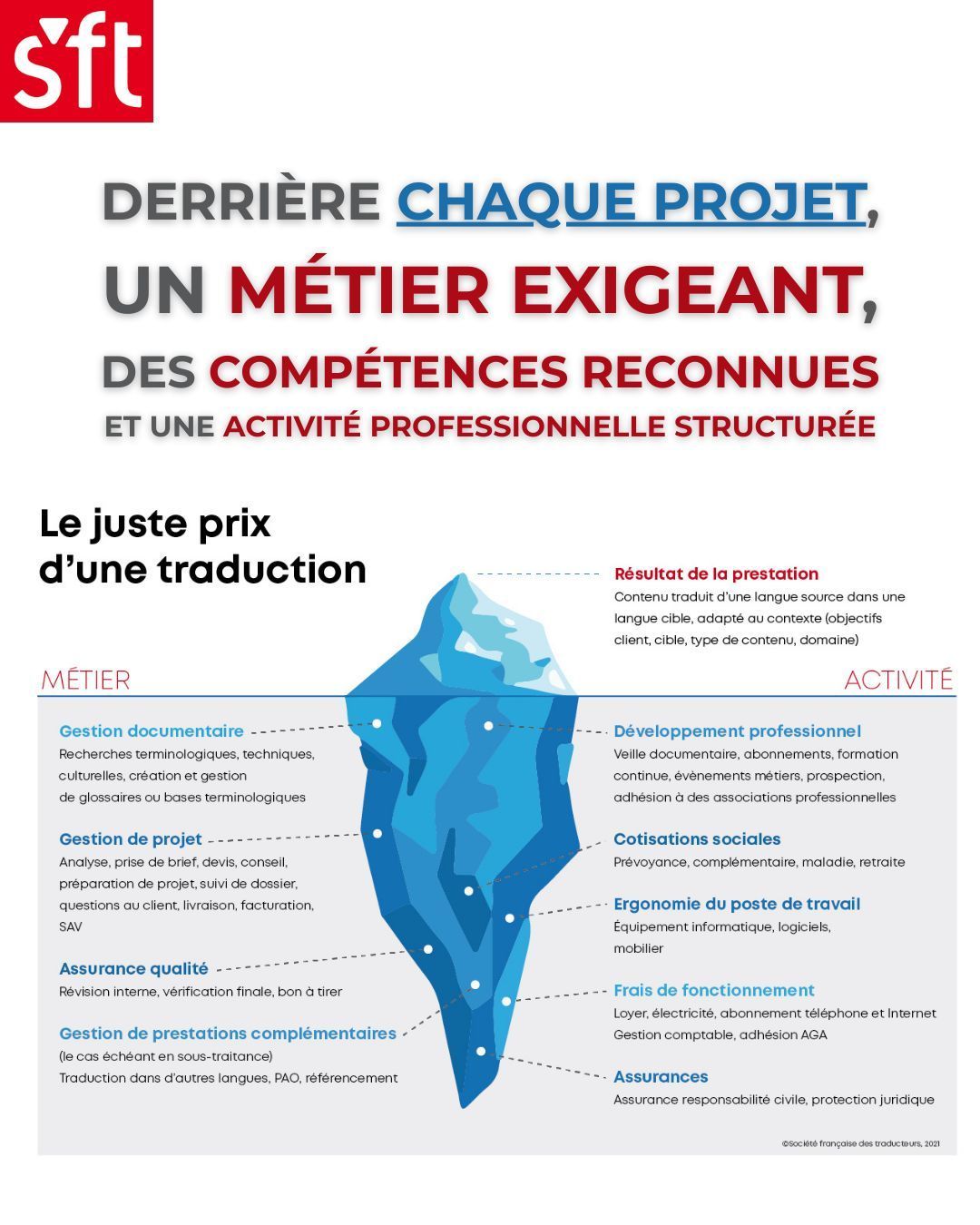
Combien coûte une traduction vers le néerlandais? D'où vient ce prix? Parce que derrière chaque projet se cachent bien plus que des mots.
door Els Peleman 2 maart 2026
I believe, I believe, I believe (Ik geloof, ik geloof, ik geloof) (translation of an extract from the Dutch song 'Avond', by Boudewijn De Groot) Last week on this platform, I shared my personal story about battling my demons , my anger at having to give up my dream job due to the dire economic situation, but especially because I felt that the outside world had absolutely no idea of what it means to be a (technical) translator. Wavering between my passion, my fighting spirit, a strong belief in my added value on the one hand and a negative spiral that is inexorably pulling me downwards – you cannot live on your conviction alone – and a battle that I cannot possibly win alone. My story quickly went around the world, and the expressions of support I received in return were overwhelming, not only on LinkedIn but also in my private life. Never before has one of my posts generated such a response. What started as “I need to get this off my chest” became something I can’t put into words, let alone translate. Initially shared out of a feeling of powerlessness and despair, my story somehow gave me some strength again. That’s just the way I am. I cannot and will not dwell on the glass half empty. But I also felt that I could not keep this new feeling, no matter how small, to myself, that I had to share that tiny spark of strength with the world – and especially my colleagues. Yes, of course, the reality is what is: a reality in which “ we don’t compete against AI but against the outside world’s perception that AI can do our work *,” but please let’s not give up! That’s why I hope I can convey some of my newfound strength to you. And entrepreneurs, teachers, outsiders, anyone faced with that choice, don’t believe everything that’s written. Put it to the test and see what gives you the most value: an AI translation or a text translated by a professional. (*translated quote and newspaper headline from the Flemish quality newspaper De Standaard). No, I am absolutely not against AI. Why should I? Without AI, my LinkedIn post would never have gone around the world so fast and I would never have received so many gestures of support. It’s true that AI allows you to read something written in a language you don’t understand. I use it too when I volunteer to teach Dutch to non-native speakers. But I’m never going to claim that AI can take over your job, so please don’t say that about mine either! As I said: “Of course, you can use AI to translate my post into your native language.” But don’t expect AI to convey my story, my despair, my passion with all their nuances. When it comes to deep understanding, especially in communicating emotions, AI fails miserably. For example, an Iranian refugee recently told me in Dutch about his traumatic experience with the Revolutionary Guards. I understood very well that what he was trying to say in Dutch – despite already having mastered the language quite well – was not even half of what he really wanted to say. That’s one of the first and all too common issues you face as a translator and for which you have to come up with a suitable solution: every language is built differently. While Arabic abounds with metaphors to describe mental and physical complaints, Inuit languages – never call them ‘Eskimos’, this is highly offensive to them – have countless words for snow and African dialects for cocoa, your terminology options in Dutch (and by extension almost all Western languages) are far more limited. That is also why I chose a snippet from a Dutch song that for me symbolizes rock-solid trust.
Ik ben er rotsvast van overtuigd dat ik, technisch vertaler, niet vervangbaar ben door AI.
door Els Peleman 2 maart 2026
Ik ben heilig overtuigd dat ik niet vervangbaar ben door AI. Ga de challenge met mij aan en bezorg mij jouw tekst en ik laat je zien waar ik het verschil maak.
Combien coûte une traduction?
door Els Peleman 2 maart 2026
« Votre offre de prix est deux fois plus chère que celle de votre collègue. Est-ce normal ? » « Oh là là, c’est bien cher. » Vous avez ce type de réactions lorsque vous envoyez des offres de prix ? Que répondez-vous à cela ?
Vertalen met ChatGPT. Een slim plan of toch beter vertrouwen op een professional?
door Els Peleman 14 januari 2026
“Met DeepL en ChatGPT gaat vertalen toch sneller? Waarom zie ik dat niet in de prijs?” Misschien omdat ik nadenk over elk woord en artificiële intelligentie niet?
Kan ChatGPT net zo goed vertalen als ik met mijn 25 jaar ervaring?
door Els Peleman 31 oktober 2025
Wat kan ik met mijn ervaring wat ChatGPT en Google Translate niet kunnen? Wat maakt het verschil tussen mijn ervaring als vertaler en een machinevertaling?
Meer posts